Transcript
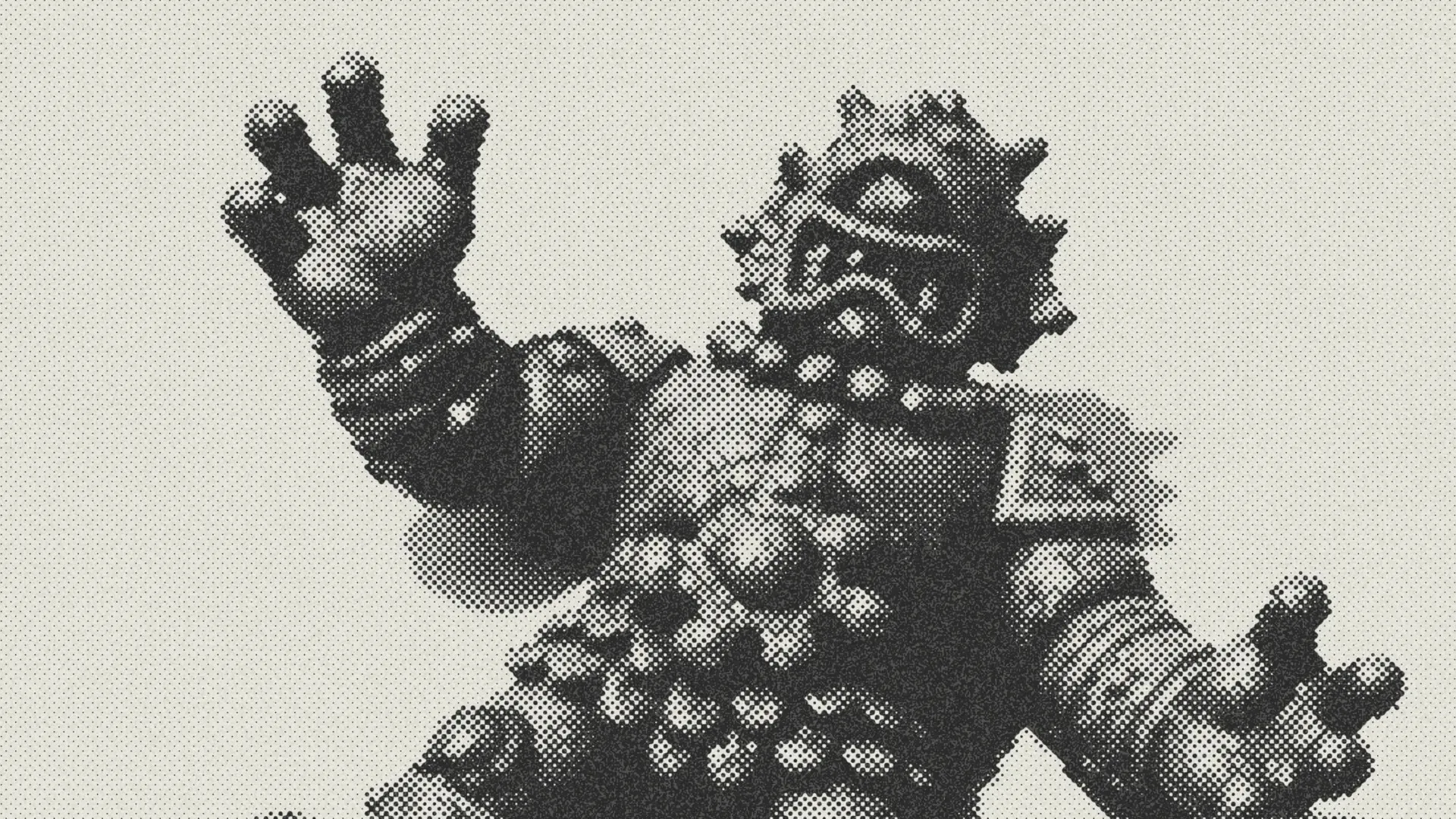
Yam, 0:03. What you can see here is Rothko understanding the context of the imagery I got inside the canvas. Then he's picking them up with various tools and starting to combine them in different, creative and unique ways. And this is a huge leap from manual process of designers loving Plnty and working inside the canvas to a fully agentic pipeline, which can take the power of a single designer to a multiplier of 10.
Yam, 0:25. Imagine that you as a creative director are sitting, running a predictable skill that allowing you to take a collection of imagery or videos and combining them in an absolutely unusual way from the common creative agents.
Yam, 0:39. I've been working heavily on the brain of Rothko over the past months. It is using the most capable models we have nowadays and combining it with our decisions making and understanding of the creative process that I've been dealing with all my adult life.
Yam, 0:53. Our vision for Rothko is to allow a creative team of just few people to perform in multipliers of 10x in terms of their creative capabilities. We're rolling this out today for the users using Plnty, currently the closed beta, and this is going to be accessible for all of you over the coming weeks.
At Yambo Studio, we've been refining the rhythm of our product films for years. I know how I want a shot to feel, but getting that across to an AI takes more than describing it. Over the past few months, I've been working on the same problem with Rothko, Plnty's creative agent: how to turn our experience into decisions it can make as it works.
01 / Knowledge
Inheriting domain knowledge
We've been developing this rhythm since around 2016. The movement speeds up into a cut, carries through it, then slows down to give you time with the product. I brought it into two films I made in Plnty, a foil package and a pair of headphones.
Then we tried carrying it into a film of a kids camera. Words alone didn't capture the rhythm. With the foil film as a motion reference, the new film began accelerating around the cuts and slowing inside the shots.
We used optical flow to measure movement between frames and compare the films. The reference clip guided the generation; the curves below measure the result. This was a test I directed in Plnty. With Rothko, we're working on making more of that studio knowledge available through examples and guidance it can use on its own.
02 / Creativity
Designing the creativity ladder
I wanted a way to choose how far Rothko takes an idea. Creativity gives it six levels of freedom over composition, scale and staging. Higher doesn't mean better. It depends on how much room you want to leave open.
These early tests used the same asks at each level. Stronger adjectives barely changed the pictures; changing the staging did. At the low end, Rothko writes a plain brief. From the middle up, it draws on our team's taste, with bolder staging at the top. Your brief still sets the boundaries.
| Six steps | Very low | Low | Medium | Medium high | High | Very high |
|---|---|---|---|---|---|---|
| From wordsPerfume launch"a launch picture for a new perfume called North" | 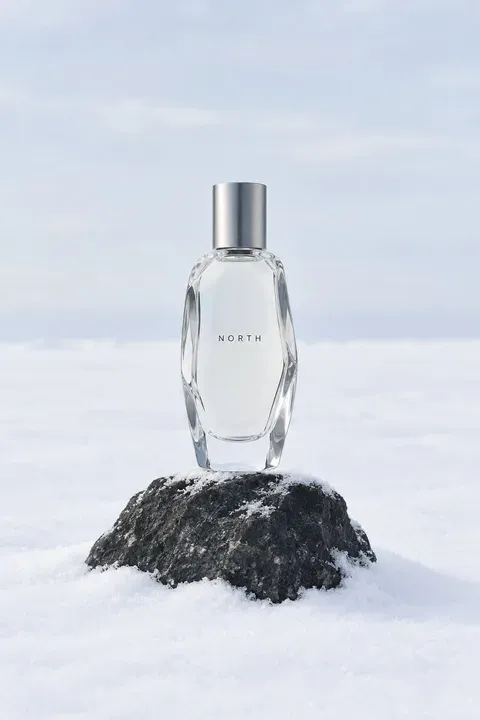 |  | 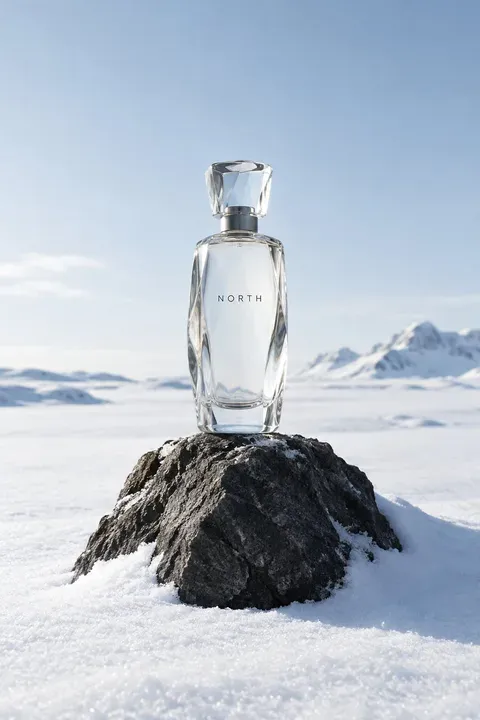 |  |  |  |
| EditDance festival poster"turn this into a poster for a dance festival", on Sasha's dancer | 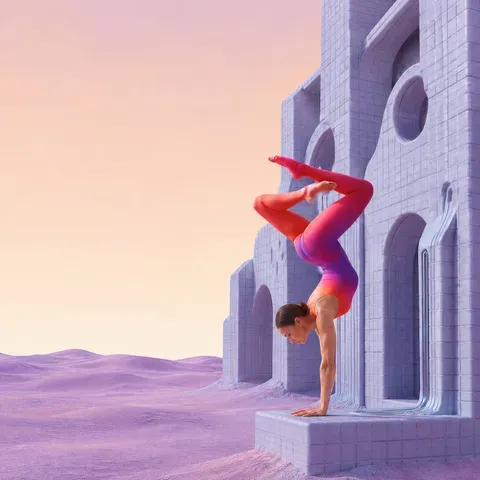 | 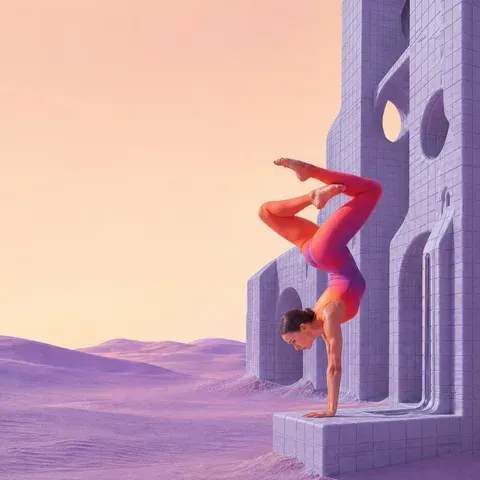 | 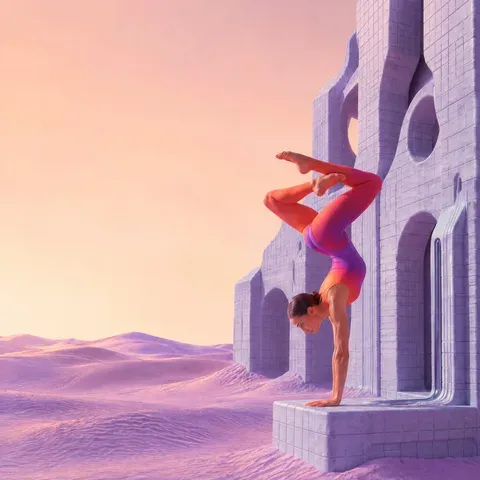 | 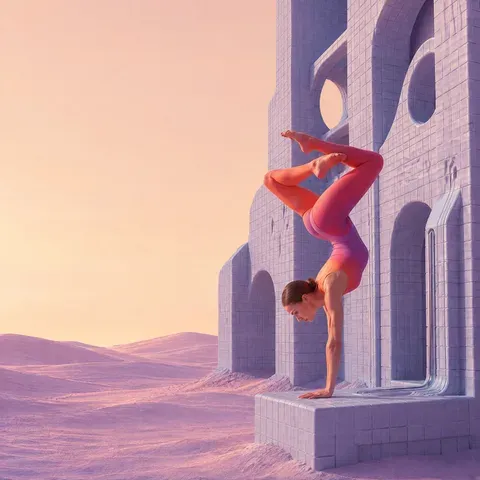 |  |  |
| EditPerfume campaign"make a campaign picture for this perfume", on Sasha's bottle |  |  |  |  |  |  |
| From wordsLemon cookbook"a cover for a cookbook about lemons" |  |  |  |  |  |  |
03 / Skills
Creative skills
A creative skill is a way of working we've written down for Rothko. It follows a set of stages, choosing and developing pictures within them. The stages stay in order; the pictures it carries forward change with the work.
Select a few pictures, open Rothko's chat and press Run a creative skill. That starts the whole job, with three seconds to cancel using Esc before it spends credits. You can stop a run at any time. Turn on Spending limits in Settings, under Creative Agent, to require approval above your limit.
Inside a run
In the film at the top, I started Moodboard explorer with three pictures. Rothko mixed what it found in them, giving the doll from one picture the handstand and desert from another. It chose results to combine, explored them through new angles and close-ups, then made short clips. That run produced more than 40 pictures and two clips in about nine minutes.
Rothko opens and runs the tools itself. Generations use credits; its selection decisions are free. The chat shows what's happening, the time and the credits spent.
04 / Brain
The brain of Rothko
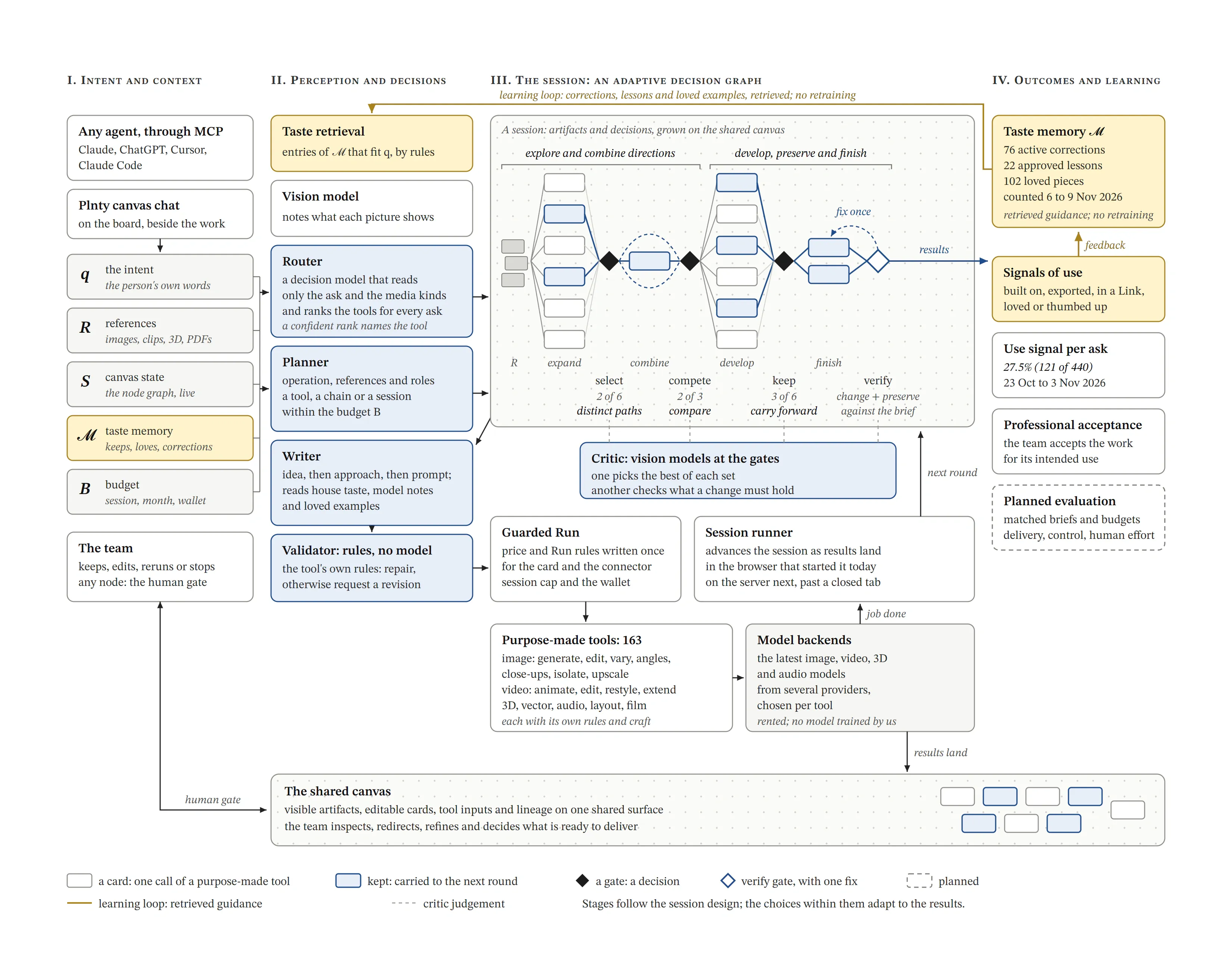
Rothko uses separate models to plan, write instructions and judge results. Our corrections and examples guide the planning and writing. The judge compares pictures against your brief and the criteria for that stage. Bringing our taste more directly into those judgments is work we still have to do.
In a session recorded for the paper, Rothko kept three of eight first results, one from each of three directions. It combined the keepers into another picture, then began developing all four. We still need to measure how often those choices lead to work a team actually uses.
From Yam
A lifetime of creative work teaches you what to explore, what to keep, and when to change direction. Over the past few months, I've been pouring that experience into Rothko, giving it a sense of how creative decisions get made, and what makes an idea worth pursuing.
Automating the Creative Workflow
We've written about this in Automating the Creative Workflow. The paper describes what we've built, the decisions we've recorded and what we still need to test. It also looks beyond today's skills, toward an agent that can choose which stage the work needs next.
The draft is confidential for now. Sign in and request access; we'll email you when it's available to your account.
More hands for a small team
I want a small creative team to have more room to explore an idea before committing to it. Rothko can take on the combinations, variations and first clips, leaving us more time to choose what deserves attention and work on the finish.
Sources and methodology
The opening film records my run on 3 November 2026; its counts include only Rothko's outputs. The timelapse reconstructs a separate run on 14 November from the board's positions and timestamps. The Creativity grid comes from our tests on 13 November, with edit references by Sasha, our designer.
The motion measurements, system diagram and 9 November selection example come from Automating the Creative Workflow, version 1.1.8. The measured films were made in Plnty. My Instagram post credits the people I learned and developed the studio's rhythm with. The film transcript is unchanged; the quote below The brain of Rothko was written for this article.
About the author

Run a skill on your own moodboard
Select a few pictures on a board, open Rothko's chat and press Run a creative skill.